Patagonia is not a place you just show up and wing it. The weather shifts from sun to snow in twenty minutes. The trails are long, the distances between resupply points are real, and the permits require advance booking. This guide walks you through exactly what you need to do, in what order, to plan your first multi-day trek in Patagonia without the panic.
Pick Your Route and Season First — Everything Else Follows
Your route choice determines your gear list, your budget, and your timeline. Two routes dominate first-timer conversations: the W Trek in Torres del Paine (Chile) and the Laguna de los Tres circuit near El Chaltén (Argentina). The W Trek runs 4–5 days and covers the iconic towers, Grey Glacier, and French Valley. The Laguna de los Tres route is shorter — 3 days — but steep, ending at the base of Mount Fitz Roy.
When to Go
The trekking season runs October through April. Peak season is December through February, when days are longest and temperatures are mildest (5–15°C / 41–59°F). Book campsites and refugios at least 3–4 months ahead for December–February slots. Shoulder months (October, November, March, April) have fewer crowds but shorter daylight and more rain.
Do not attempt multi-day treks in Patagonia during winter (May–September). Trails are snow-covered, refugios are closed, and park rangers actively discourage entry. This is not a recommendation — it is a safety boundary.
Route Comparison
| Route | Days | Distance | Difficulty | Booking Required |
|---|---|---|---|---|
| W Trek (Torres del Paine) | 4–5 | 71 km (44 mi) | Moderate | Yes — refugios & campsites |
| O Trek (Torres del Paine) | 7–10 | 110 km (68 mi) | Strenuous | Yes — full circuit |
| Laguna de los Tres (El Chaltén) | 3 | 25 km (15.5 mi) | Moderate to strenuous | No — free camping |
| Huemul Circuit (El Chaltén) | 4 | 65 km (40 mi) | Strenuous | No — but glacier crossing gear required |
For absolute beginners, the W Trek is the safest bet. It has refugios every 5–8 km, marked trails, and you can carry less weight by booking bed-and-meal packages. The Laguna de los Tres route is cheaper but requires full self-sufficiency: tent, stove, food for three days.
Booking Permits and Accommodation — Do Not Skip This
This is where most first-timers trip up. Torres del Paine National Park requires two separate bookings: a park entry permit and a reservation for each night of camping or refugio lodging. You book both through the official CONAF website or authorized operators like Vertice Patagonia and Las Torres Patagonia. The W Trek cannot be done without confirmed accommodation — rangers check at every checkpoint.
El Chaltén, by contrast, has no entry fee and no booking system for campsites. You show up, pick a spot at Poincenot or Laguna de los Tres base camp, and hike. The tradeoff is zero infrastructure: no showers, no food service, no emergency phones.
Book your Torres del Paine slots at least 3 months ahead for peak season. Refugio beds cost $70–$120 per night including dinner and breakfast. Campsites cost $15–$30 per night. If you try to book in January for February, you will find nothing available. That is not a scare tactic — it is the reality of limited capacity.
Gear Selection — Light Is Fast, Warm Is Safe
Patagonia punishes heavy packs. A 15 kg (33 lb) pack on the W Trek will make you miserable by day two. Target 10–12 kg (22–26 lb) including food and water. The single most important item is your rain jacket and pants. Do not bring a cheap poncho. Spend real money on a Gore-Tex shell — something like the Arc’teryx Beta AR ($600) or the Patagonia Torrentshell 3L ($179). These are not optional. You will get rained on, hailed on, and wind-blasted within the same hour.
Layering System
Base layer: merino wool (Smartwool 150 or Icebreaker). Mid layer: fleece or synthetic puffy (Patagonia R1 or Nano Puff). Outer layer: waterproof shell. That is three layers. No cotton anywhere. Cotton kills in Patagonia — once wet, it stays wet and pulls body heat out fast.
Sleep System
If you are camping, bring a 3-season tent (MSR Hubba Hubba NX or Big Agnes Copper Spur), a sleeping bag rated to -5°C (23°F) — the Marmot Trestles Elite Eco 20 works well — and an insulated sleeping pad (Therm-a-Rest NeoAir XTherm). Refugios provide blankets and bunks, but you still need a sleeping bag liner for hygiene and warmth.
Do not bring a camp chair, a full-size towel, or more than one change of clothes. Every gram you pack is a gram you carry up a mountain. Leave the DSLR camera at home — a modern smartphone (iPhone 15 Pro or Samsung Galaxy S24) takes photos good enough for any album.
Food, Water, and Fuel — Plan Every Meal
There are no grocery stores on the trail. On the W Trek, you can buy meals at refugios if you book the full-board option. That is the easiest approach: pay for dinner and breakfast, carry only lunch snacks. On the O Trek or in El Chaltén, you carry all food from town.
Puerto Natales (Chile) and El Chaltén (Argentina) have well-stocked outdoor stores. Buy dehydrated meals from brands like Backpacker’s Pantry or Mountain House — the Pad Thai and Chicken Teriyaki are reliable. Pack 0.5 kg (1.1 lb) of food per person per day. Add high-calorie bars (Clif, ProBar) and electrolyte tablets (Nuun).
Fuel canisters (isobutane-propane mix) are available in Puerto Natales at Erratic Rock and in El Chaltén at Campamento Base. Buy them after you arrive — you cannot fly with canisters. The standard size is 230g, which lasts about 3–4 days for two people boiling water twice a day.
Water is drinkable from streams and lakes throughout both parks. Treat it with a Sawyer Squeeze filter or Aquamira drops to be safe. Giardia is present in Patagonian water. Do not drink untreated water even if it looks clear.
Common Mistakes and How to Avoid Them
Three mistakes sink first-time Patagonia trekkers more than anything else.
Mistake 1: Underestimating the wind. Patagonia wind averages 30–50 km/h (19–31 mph) and gusts over 100 km/h (62 mph). It will knock you off balance on exposed ridges. Pack trekking poles — Black Diamond Trail Pro poles ($120) — for stability. Wear sunglasses with a strap. Secure everything in your pack; the wind can rip a loose jacket out of your hands.
Mistake 2: Not booking accommodation ahead. Described above, but worth repeating: if you show up in Torres del Paine without reservations, you will be turned away at the park entrance. The rangers do not make exceptions. Plan your route, book every night, and print your confirmations.
Mistake 3: Overpacking or underpacking clothing. The average high in December is 15°C (59°F). The average low is 3°C (37°F). But on any given day, you might see 25°C and sun at noon and 2°C with sleet at 3 PM. Bring one warm puffy jacket, one fleece, one base layer, one rain shell, one pair of hiking pants (convertible to shorts), and one pair of thermal leggings for sleeping. That is it. Do not bring jeans, cotton shirts, or a second pair of boots.
When not to do a multi-day trek: If you have a fear of heights, unstable knees, or less than 3 months of regular hiking practice, do not attempt the O Trek or Huemul Circuit. The W Trek is manageable for a fit beginner. The Laguna de los Tres route has a steep final 2 km of loose scree that requires sure footing and no vertigo. There is no shame in doing day hikes instead — the Mirador Las Torres day hike is 18 km round trip and gives you the iconic view without the overnight commitment.
Final Logistics — Getting There and Getting Out
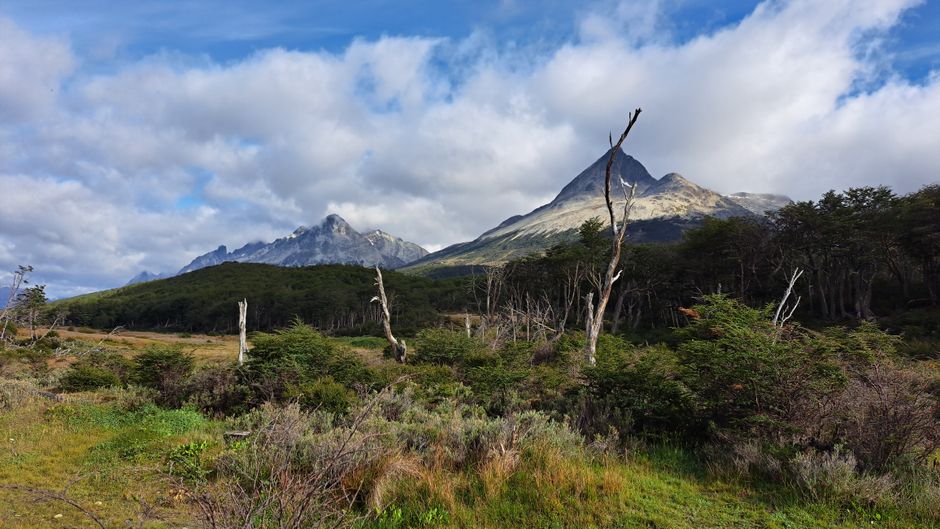
Fly into Punta Arenas (Chile) for Torres del Paine or into El Calafate (Argentina) for El Chaltén. From Punta Arenas, take a bus to Puerto Natales (3 hours, $10–$15), then another bus to the park entrance (2 hours, $10). From El Calafate, take a bus to El Chaltén (3 hours, $15–$20). Book bus tickets online through Buses Pacheco or Chaltén Travel at least a week in advance during peak season — they sell out.
Exchange cash before you leave the airport. Puerto Natales has ATMs but they run out of money on weekends. El Chaltén has one ATM that frequently empties. Carry Chilean pesos or Argentine pesos depending on your route. Credit cards work at larger hotels and tour operators but not at small shops or park entry gates.
Travel insurance that covers helicopter evacuation is not optional. World Nomads and SafetyWing both offer policies that cover trekking up to 4,000 meters (13,100 ft). Print your policy number and emergency contact numbers. Cell service is nonexistent on most trails. A personal locator beacon — the Garmin inReach Mini 2 ($400) — is worth the weight for solo trekkers or anyone going off the W Trek corridor.
The first trek is the hardest because you do not yet trust the rhythm of the trail. You will. Patagonia demands preparation and rewards it with views that reset your sense of scale. That first glimpse of the Torres del Paine spires at sunrise, or Fitz Roy burning orange at dusk — those moments do not disappoint.