If you’re dreaming of a beach getaway where history and natural beauty collide, Turkey’s coastline is calling your name. The Historic Beaches of Turkey offer more than just sun and sea—they let you step from golden sands straight into the footsteps of ancient Lycian, Greek, and Roman civilizations. Imagine swimming beside ruins that whisper millennia-old stories, or lounging near protected turtle nesting sites framed by turquoise waters and pine forests. Whether it’s Patara’s vast dunes, Olympos’s timeless ruins, or Cleopatra Beach’s legendary sands, these spots aren’t your typical beach day—they’re a journey through time with every wave. Ready to uncover Turkey’s coastal treasures where history and relaxation meet? Let’s dive in!
Why Visit Historic Beaches in Turkey?
Visiting the historic beaches of Turkey offers a unique blend of relaxation and culture. Imagine sunbathing on golden sands or swimming in turquoise waters just steps away from ancient ruins that tell stories from millennia ago. Along Turkey’s stunning Mediterranean coast, you’ll find the perfect balance between unwinding and exploring history.
These beaches reflect a rich historical tapestry shaped by Lycian, Greek, Roman, and Byzantine civilizations. You’re not just enjoying the sea; you’re walking alongside remnants of ancient cities, theaters, temples, and other archaeological wonders. It’s a rare chance to connect with Turkey’s deep past while soaking up the sun.
Nature lovers will also appreciate the natural highlights—soft dunes, pine-backed shores, and crystal-clear waters that support protected ecosystems. Many of these beaches double as important habitats for species like the loggerhead turtle, adding to their appeal and conservation value.
For the best experience, plan your visit in the shoulder seasons of May to June or September to October. During these months, you’ll enjoy ideal weather without the summer crowds, making it easier to explore both the historic sites and pristine beaches at a relaxed pace.
Top Historic Beaches in Turkey: Patara Beach (Antalya Region)
Patara Beach is one of Turkey’s longest and most stunning historic beaches, stretching approximately 18 kilometers of golden sand, backed by rolling dunes and crystal-clear turquoise waters. This beach offers a perfect blend of natural beauty and rich history, making it a must-visit spot on the Lycian coast beaches.
The beach sits right next to the ancient city of Patara, home to well-preserved Lycian ruins including a Roman theater and the remains of one of the earliest known parliaments. Exploring these archaeological sites adds a fascinating cultural layer to your beach day.
A unique highlight of Patara Beach is its status as a protected national park, serving as a major nesting site for loggerhead turtles. Conservation efforts here help protect these endangered creatures, so visitors should respect marked zones, especially during nesting season.
Activities and Tips:
Walk along the dunes and enjoy the unspoiled nature
Visit the ancient city ruins early in the day to avoid crowds
Bring water and shade, as facilities are limited
Respect turtle nesting areas; no night access on protected beaches
Combine your visit with a hike along nearby Lycian Way trails
For more on traveling smart along Turkey’s coastlines, check out helpful information about travel tips for first-time visitors.
Olympos Beach and Çıralı (Antalya Region)
Olympos Beach and Çıralı offer a perfect mix of pebble and sandy shores, nestled between towering mountains and lush pine forests. This area feels like a hidden gem along the Lycian coast beaches, known for its relaxed, secluded vibe and largely untouched nature reserve atmosphere.
The big draw here is the ancient ruins of Olympos, a Lycian city with fascinating remnants including tombs, baths, and an amphitheater right near the beach. History lovers will appreciate exploring these well-preserved archaeological sites while enjoying the natural beauty. Just a short walk away are the famous Chimaera eternal flames — natural gas vents that have been burning for centuries, adding a mystical touch to the landscape.
Unique to this location is the peaceful, nature-focused environment, making it ideal for visitors looking to combine beach time with hiking and cultural discovery. The surrounding forests offer great trails, while you can cool off by swimming in the crystal-clear waters. Keep in mind that this area maintains a protected status, so respecting conservation rules is important.
Tips for visiting Olympos and Çıralı:
Visit in May-June or September-October for pleasant weather and fewer crowds.
Explore the ruins early in the day to avoid the midday heat.
Bring sturdy shoes if you plan to hike nearby trails or explore rocky shorelines.
Support local eco-friendly accommodations that help preserve the area’s natural beauty.
This blend of nature and history makes Olympos Beach and Çıralı a standout spot for anyone interested in Turkey beaches with archaeology and a quieter beach experience. For those curious about exploring more natural and historic spots, check out our tips on packing essentials and survival strategies for outdoor adventures.
Phaselis Beach (Antalya Region)
Phaselis Beach is a stunning spot featuring three bays with a mix of sandy and pebble shores, all nestled within fragrant pine forests. This historic beach stands out on the Turkish Riviera for its ancient Lycian port city ruins that lie right on the coast. Visitors can explore well-preserved remains like aqueducts, a Roman theater, and the bustling agora, all adding rich historical depth to the natural beauty.
The crystal-clear turquoise waters here are perfect for snorkeling, offering a rare chance to swim over submerged artifacts and glimpse the underwater archaeology of this important Lycian harbor. The surrounding pine-backed shores provide shade and a tranquil atmosphere, making it a great place to relax between exploring the ruins.
Activities and tips:
Swim and snorkel to see underwater ruins and marine life.
Walk along shaded forest paths connecting the bays.
Visit early in the day or late afternoon to avoid crowds.
Bring water shoes for the pebble areas and sunscreen for beach time.
Phaselis Beach is an excellent example of Turkey beaches with archaeology, combining natural charm with historical intrigue, making it a must-visit on the Lycian coast.
For practical advice on preparing for your trip, check out this handy guide on how to prepare for your beach visit.
Cleopatra Beach (Alanya)
Cleopatra Beach is famous for its fine golden sand and clear turquoise waters, all set against the dramatic backdrop of Alanya Castle perched on a rocky peninsula. This historic beach is steeped in legend—it’s said that Cleopatra herself once swam here, adding to the allure of its ancient charm. Nearby, you can explore Alanya Castle and various ancient ruins that remind you of the area’s rich past along the Turkish Riviera.
What sets Cleopatra Beach apart is its easy urban accessibility and lively promenade lined with cafes and shops, making it perfect if you want to combine a beach day with some local culture and convenience. Whether you’re interested in sunbathing, swimming, or strolling through historic settings, this beach blends relaxation with archaeology seamlessly.
Tips for visiting Cleopatra Beach:
Visit early in the morning or late afternoon to avoid crowds.
Explore Alanya Castle for panoramic views of the coastline.
Try local seafood at the nearby promenade restaurants.
Bring water shoes for the rocky sections near the castle.
Cleopatra Beach offers a unique mix of history, stunning scenery, and urban comfort, making it one of the must-visit ancient ruins beaches in Turkey along the Mediterranean coast.
Top Historic Beaches in Turkey: Side Beaches (Antalya Region)
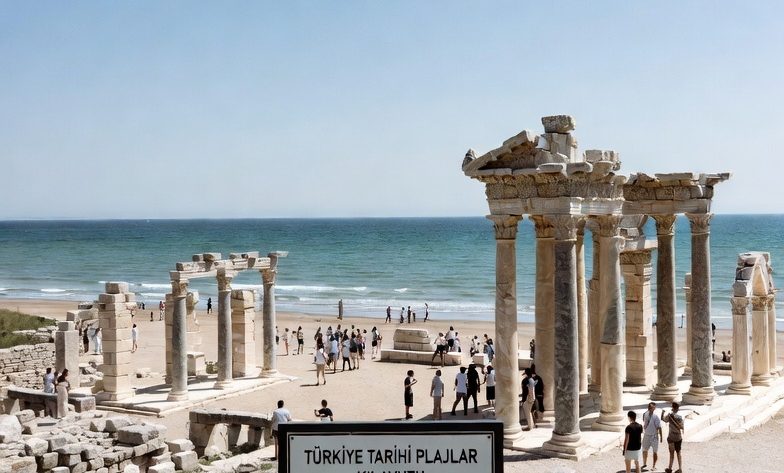
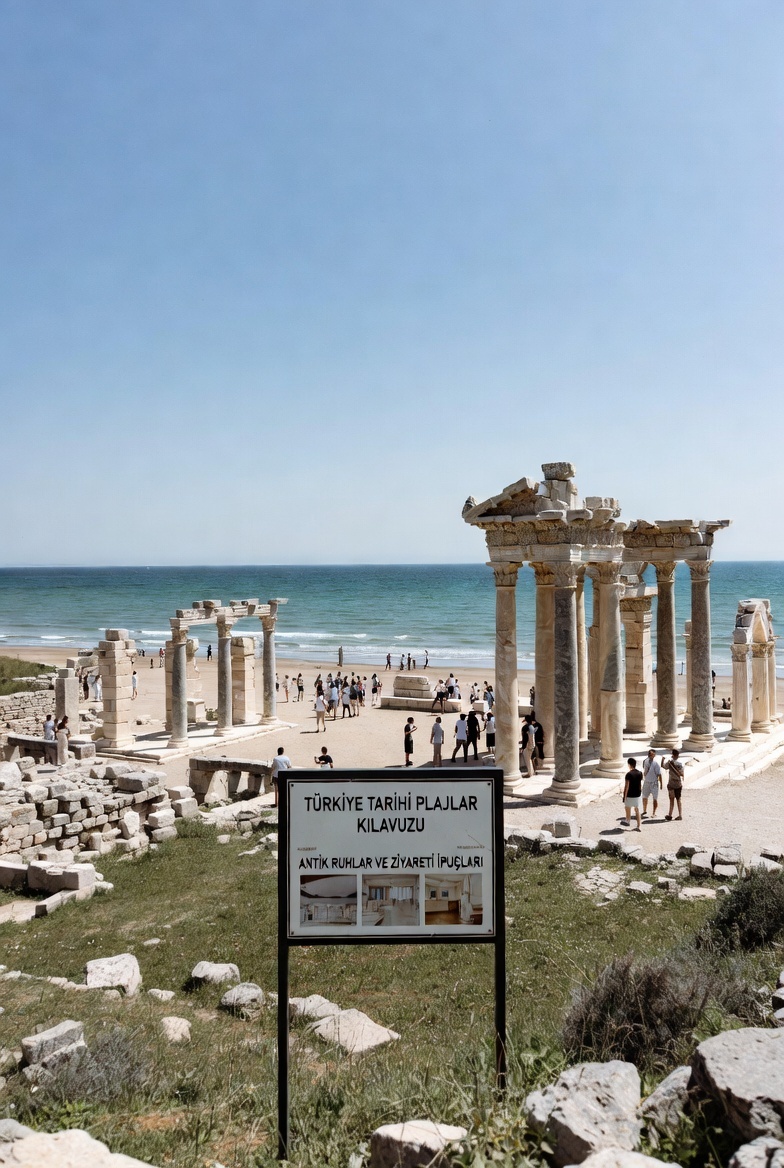
Side’s east and west sandy beaches stretch gracefully around a peninsula, offering both beautiful coastlines and rich history. Along these shores, you’ll find the impressive ruins of the Temple of Apollo right by the sea, giving the beach an open-air museum vibe where Roman columns and the ancient theater stand as reminders of Turkey’s vibrant past. This blend of archaeology and modern resort amenities makes Side Beaches unique—whether you want to unwind in a beachside café or explore historic ruins, it’s all within easy reach.
Highlights:
Ancient Temple of Apollo ruins just steps from the shore
Roman theater and scattered columns adding historical charm
Sandy beaches perfect for sunbathing and swimming
Resort facilities including restaurants, water sports, and boat tours
Tips for visitors:
Visit early in the morning or late afternoon to avoid crowds and enjoy cooler temperatures
Combine your beach day with a walk through Side’s old town to see more archaeological sites
Don’t miss guided tours that explain the rich Lycian, Roman, and Byzantine history along the coast
Bring comfortable footwear if you plan to explore ruins near the beaches
Side Beaches provide a fantastic way to relax while stepping back into the past, shimmering under Turkey’s famous Mediterranean sunshine and turquoise waters. For travel logistics, Antalya’s international airport nearby makes getting here simple, whether by rental car or public transport.
For more on regional travel options, check out this detailed guide on how to get to key airports serving the Turkish Riviera.
Iztuzu Beach (Dalyan)
Iztuzu Beach, near Dalyan, is a stunning long sand spit that separates the Dalyan River from the Mediterranean Sea. This historic beach is not only a natural wonder but also a significant site on the Turkish Riviera known for its prime loggerhead turtle habitat. Just a short boat ride away lies the ancient city of Kaunos, famous for its Lycian rock tombs carved into the cliffs, adding rich archaeological value to the beach visit.
The beach itself is a protected area, crucial for the endangered loggerhead turtles that come to nest here every year. Visitors can witness this incredible natural event responsibly by sticking to marked zones and avoiding night access when turtles are most active. Alongside turtle watching, you can enjoy sunbathing on the warm sands, swimming in clean turquoise waters, or exploring nearby mud baths reputed for their therapeutic benefits.
Tips for visiting Iztuzu Beach:
Arrive early to avoid crowds, especially in peak months.
Use eco-friendly sunscreen to protect the fragile ecosystem.
Combine your beach day with a trip to Kaunos ruins for a full historic experience.
Wear water shoes as the river mouth can have some pebbly patches.
Iztuzu Beach offers a rare blend of wildlife conservation and ancient history, making it one of Turkey’s most unique historic beaches.
Kaputaş Beach (Near Kaş/Kalkan)
Kaputaş Beach is a stunning turquoise cove framed by steep cliffs, offering one of the most photogenic spots along Turkey’s Mediterranean coastline. This small but breathtaking beach is perfect for those seeking a peaceful, secluded getaway on the Lycian coast beaches. The dramatic gorge setting provides a natural shelter, making the waters calm and crystal clear—ideal for swimming and snorkeling.
Historically, Kaputaş Beach is close to key ancient sites, including the Kekova sunken ruins, an underwater archaeological treasure accessible via boat trips. It also sits near popular Lycian Way hiking trails, so visitors can combine beach time with exploring ancient Lycian civilization footprints in the area.
Unique features and tips:
Secluded beach access requires descending a long staircase, so bring sturdy shoes.
The dramatic cliffs and clear waters make it a favorite for photographers.
Combine your visit with a boat tour to Kekova, known for its submerged Lycian city remains.
Arrive early to avoid crowds, especially in peak summer months.
For travelers interested in combining history and natural beauty, Kaputaş Beach offers a perfect blend along Turkey’s historic turquoise coast.
Practical Guide for Visiting Historic Beaches in Turkey
How to Get There
Most historic beaches along Turkey’s Turquoise Coast are easy to reach via nearby airports like Antalya and Dalaman. From there, you can rent a car or use public transport such as buses and shared taxis to get closer to sites like Patara Beach, Olympos, or Iztuzu Beach near Dalyan.
Accommodation Options
You’ll find a range of places to stay, from boutique hotels and eco-lodges tucked into nature reserves to larger resorts in towns like Alanya or Kalkan. Booking near the beach or historic ruins lets you enjoy early morning walks by ancient sites or turtle nesting grounds.
Conservation Tips
Many of these beaches, especially loggerhead turtle nesting sites like Patara and Iztuzu, are protected. To help keep them safe:
Avoid walking on dunes or nests
Respect no-night-access rules on protected beaches
Follow local guidelines to minimize your impact on sensitive ecosystems
Combining with Other Attractions
Make the most of your trip by mixing beach time with exploring history and nature:
Hike parts of the Lycian Way, which runs near many historic beaches like Kaputaş and Phaselis
Take boat tours to Kekova’s sunken ruins or explore ancient ports like Kaunos near Dalyan
Safety and Essentials
Bring sun protection as the Mediterranean sun can be strong
Water shoes are handy, especially for pebble beaches like Olympos or Phaselis
Some ancient sites require small entry fees—keep some cash ready
This practical approach will help you enjoy the unique blend of turquoise waters, archaeology, and beach relaxation that Turkey’s historic beaches offer.
FAQs About Historic Beaches in Turkey
What is the best historic beach for families?
Patara Beach is ideal for families. Its long stretch of golden sand offers plenty of space for kids to play, while the nearby ancient Lycian ruins add a cool history lesson. Plus, the shallow waters and protected turtle nesting zones make it safe and interesting.
Are these beaches crowded in summer?
Yes, many historic beaches on Turkey’s Turquoise Coast, like Side and Cleopatra Beach in Alanya, get busy during peak summer (July-August). For fewer crowds and better weather, visit in May-June or September-October.
Can you swim near ancient ruins?
Absolutely. Beaches like Phaselis and Olympos offer crystal-clear waters ideal for swimming and snorkeling right next to ancient ruins. Just be respectful of protected areas and avoid touching submerged artifacts to help preserve these sites.
How to visit turtle nesting sites responsibly?
If you’re visiting beaches like Iztuzu or Patara, follow these tips:
Avoid night visits to beaches during nesting season (May to August)
Stay out of marked turtle zones and keep noise levels down
Don’t use flash photography near hatchlings
Support local conservation efforts by following signs and guidelines
Visiting these historic beaches responsibly ensures that both nature and history stay intact for everyone to enjoy.