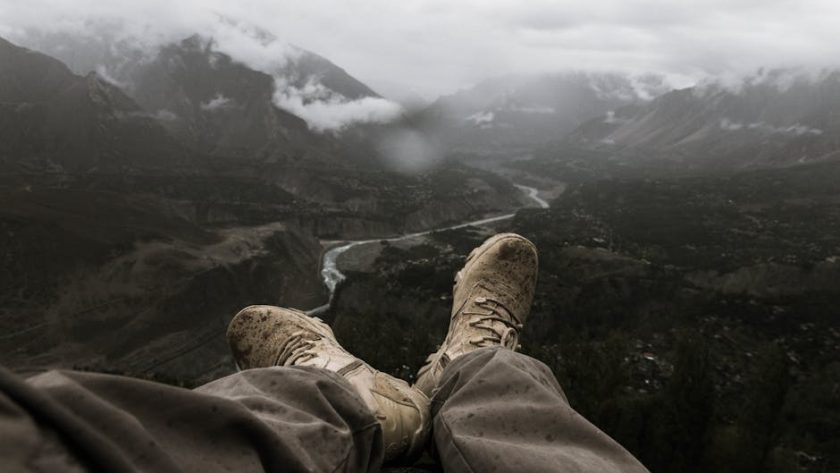
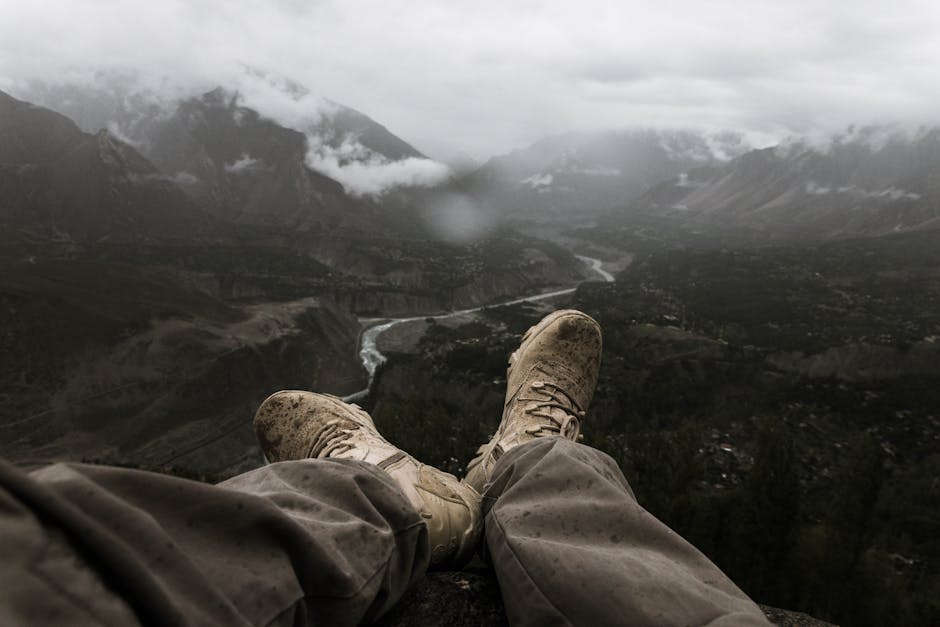
You’re three days into a hike in the Scottish Highlands. It’s been raining since morning. The trail has turned to boot-sucking mud, and every stream crossing is now a guessing game. This is exactly where your boot choice stops being theoretical.
Merrell and Salomon both make excellent waterproof hiking boots. But "excellent" looks different depending on the terrain, the temperature, and how long you’re out there. This guide tells you which boot to buy, which to skip, and why — based on specific models, real specs, and what actually fails in sustained wet conditions.
Why Wet Climate Hiking Demands More Than Standard Waterproofing
Wet climate hiking isn’t occasional puddles. It’s six hours of continuous rain, stream crossings, mud that grabs your heel, and condensation building inside your boot because the ambient humidity is 90%. Most boots marketed as "waterproof" handle light rain fine. Far fewer handle sustained exposure — and the difference comes down to three things: membrane construction, seam treatment, and sole compound.
Full Seam Sealing vs. Critical Seam Sealing
Every waterproof boot has a membrane — a thin layer that blocks water from passing through the upper. The weak point isn’t the membrane itself. It’s the stitching. Every needle hole is a potential water entry point.
Critical seam sealing covers only the most exposed seams — typically the toe and heel. Full seam sealing tapes every stitch line on the boot. In a drizzle, critical sealing holds. On a four-hour rain hike or a stream crossing? Full seam sealing is what you want.
Both Merrell and Salomon use full seam sealing across their waterproof lines. But Salomon’s Gore-Tex Extended Comfort models use a bootie construction — the Gore-Tex layer wraps around the foot as a separate inner sock before the outer upper is assembled around it. That construction is structurally harder to compromise over time compared to a membrane bonded directly to the upper, which is how Merrell’s M Select DRY technology works on most of their boots.
Why DWR Coating Fails and What That Means for Wet Hikes
DWR stands for Durable Water Repellent. It’s the invisible treatment on the boot’s outer fabric that makes water bead off. Without a functional DWR layer, the outer shell saturates — and even if your foot stays technically dry inside the membrane, a waterlogged upper adds 200–400 grams of extra weight and cuts breathability by up to 50%.
DWR wears off with use. On a typical hiking boot, you’ll notice the outer fabric wetting out after 20–40 trail days. Merrell’s factory DWR tends to last slightly longer based on community feedback across major hiking forums. Both brands require reapplication every season — Nikwax TX.Direct Spray-On ($12) or Grangers Performance Repel ($14) both work reliably.
This is the most overlooked maintenance step for waterproof boots. You can spend $250 on a boot and watch it fail in the rain because you skipped a $12 treatment.
Collar height matters too. Shallow collars leave the boot top exposed to rainwater running down your leg. Merrell mid boots sit at roughly 4 inches; Salomon mids at 4.5 inches. Neither handles knee-deep crossings, but the half-inch advantage on Salomon keeps out more incidental water on heavy rain days.
Merrell vs. Salomon Waterproofing Technology: A Direct Comparison
Here’s where the two brands differ on the specs that actually matter for wet terrain:
| Feature | Merrell | Salomon |
|---|---|---|
| Primary waterproof membrane | M Select DRY (proprietary) | Gore-Tex or Climasalomon+ (proprietary) |
| Gore-Tex available | Select models only (Thermo Rogue GTX, Ontario GTX) | Standard across most waterproof lineup |
| Seam construction | Full seam sealed on waterproof models | Full seam sealed; bootie construction on Extended Comfort GTX |
| Outsole | Vibram TC5+ (most models) | Contagrip TD (proprietary) |
| Typical lug depth | 5mm (Moab 3 series) | 5mm (X Ultra 4), 6mm (Quest 4) |
| Price range (waterproof) | $140–$250 | $165–$280 |
| Ankle collar height (mid) | ~4 inches | ~4.5 inches |
| Moisture vapor transmission | ~6L/m²/24h (M Select DRY) | ~7.5L/m²/24h (Gore-Tex Extended Comfort) |
The key takeaway: Salomon defaults to Gore-Tex across more of its waterproof lineup, giving it third-party credibility that Merrell’s proprietary M Select DRY doesn’t carry. For weekend day hikes in the rain, that distinction rarely matters. For week-long trips in genuinely wet climates — the Scottish coast, Patagonia, the Cascades in autumn — the Gore-Tex bootie construction in Salomon’s GTX models carries a durability advantage that becomes visible after 300+ trail kilometers.
The Best Merrell Waterproof Boots for Wet Conditions
Merrell’s waterproof lineup is wider than its marketing suggests. The Moab series gets all the attention, but there are better picks depending on your terrain and temperature range.
Merrell Moab 3 Waterproof ($140)
The most popular waterproof hiking boot at this price by a significant margin. M Select DRY membrane, full seam sealing, Vibram TC5+ outsole with 5mm lugs, weight around 900g per pair in men’s size 9. Fit runs slightly wide — good if your feet swell on long days, less ideal for narrow feet who’ll feel heel lift on steep descents.
Best for: Day hikes and multi-day trips in reliably wet but non-extreme conditions — the UK, Pacific Northwest, New Zealand’s South Island. Dependable performance at an honest price point.
Merrell Thermo Rogue 3 Waterproof GTX ($250)
Merrell’s strongest boot for cold-wet conditions. This model uses a Gore-Tex membrane (not M Select DRY), 200g Primaloft insulation, and a Vibram Arctic Grip outsole — the compound engineered specifically for wet ice and rain-soaked polished rock. The collar sits higher than the Moab 3, and the overall construction is stiffer and more protective.
If you hike in Iceland, coastal Norway, Patagonia, or anywhere temperatures drop below 5°C with sustained rain, this is Merrell’s best answer by a clear margin. The Arctic Grip compound noticeably outperforms the standard TC5+ on wet granite and basalt — the kind of surface that sends hikers sliding in trail runners.
Merrell Moab Speed 2 Waterproof ($165)
Roughly 750g per pair — 150g lighter than the Moab 3. The foam midsole behaves more like a trail runner than a traditional hiking boot. M Select DRY waterproofing holds up in rain, but the lower profile delivers less ankle support on technical ground. A reasonable choice for fast-packing or shoulder-season hiking where pace matters more than aggressive ankle protection.
The Best Salomon Waterproof Boots for Wet Conditions
Salomon’s GTX lineup consistently outperforms Merrell at comparable price points in sustained wet environments. The Gore-Tex bootie construction in flagship models handles multi-day wet exposure better than bonded-membrane alternatives — and the difference shows up after day two or three on trail, not day one.
Salomon X Ultra 4 Mid GTX ($185): The Benchmark Under $200
The strongest all-around waterproof hiking boot at this price point. It weighs 840g per pair — 60g lighter than the Moab 3 — with Gore-Tex Extended Comfort, Contagrip TD outsole, and 5mm multidirectional lugs. The Chassis midsole adds torsional stability without making the boot feel brick-like underfoot.
Fit runs slightly narrower than Merrell. Wide-footed hikers should try before buying or size up half a step. For standard to narrow feet, the X Ultra 4 Mid GTX is the clearest recommendation in this category right now.
Salomon Quest 4 GTX ($230): Built for Multi-Day Loads
Heavier at 1,040g per pair, but that weight reflects a stiffer upper, 6mm lugs that shed mud faster, and a reinforced ankle collar that actually stabilizes the joint on steep wet sidehills. Gore-Tex Extended Comfort bootie construction throughout.
Hikers doing the West Highland Way in autumn, long sections of the GR20, or the Annapurna Circuit during shoulder season consistently choose the Quest 4 GTX over the X Ultra 4 when carrying a full pack. The added structure earns its weight penalty once you’re above 10kg on your back.
Salomon OUTpulse Mid GTX ($165)
Salomon’s closest competitor to the Merrell Moab 3 in price and use case. Gore-Tex membrane, Contagrip MA outsole (slightly less aggressive than TD), lighter construction. A solid entry into Gore-Tex performance without the Quest 4’s weight or price commitment. If you want Gore-Tex credibility but can’t stretch to $185, this is the call.
Sole Grip on Wet Rock and Mud: Where Each Brand Falls Short
Salomon’s Contagrip outsole outperforms Merrell’s Vibram TC5+ on wet rock. That’s the honest verdict. On rain-slicked granite slabs — the kind you encounter in the Lake District, the Cascades, or Australia’s Blue Mountains — Contagrip’s rubber compound bites harder and releases mud more cleanly between footfalls.
Merrell partially closes that gap with Vibram Arctic Grip on the Thermo Rogue 3, but that boot costs $250 and is insulated — overkill for summer wet-weather hiking. On muddy trails — clay-heavy paths in the Dolomites or mossy forest tracks in Costa Rica — both brands perform comparably. The 5mm lug pattern on both the Moab 3 and X Ultra 4 handles most mud without significant clogging. The Quest 4’s 6mm lugs clear faster but add noticeable weight per step over a long day.
One failure mode both brands share: their soles struggle on wet wooden boardwalks and river rocks polished smooth over years of water flow. No hiking boot sole handles this surface well. Slow down significantly regardless of which boot you’re wearing — this is a terrain problem, not a boot problem.
Breathability Trade-offs in Wet Climates
Do Waterproof Hiking Boots Get Sweaty?
Yes — unavoidably. Every waterproof boot traps more moisture than a mesh alternative. Gore-Tex Extended Comfort (Salomon’s standard) allows approximately 7.5L/m²/24h of moisture vapor transmission. Merrell’s M Select DRY rates around 6L/m²/24h on most models. The gap is real but not dramatic in practice. On a strenuous climb in warm weather, both membranes will leave your feet damp from perspiration that can’t fully escape through the waterproof layer. This is physics, not a defect.
Should You Pick Waterproof or Fast-Drying Boots for Tropical Wet Climates?
For hot, wet climates above 20°C — Southeast Asia, Central America, Hawaii, tropical rainforests — skip waterproof boots entirely. A fast-drying mesh trail runner gets wet quickly but dries between stream crossings and breathes far better in heat and humidity. Waterproof boots trap sweat in warm conditions, leaving your feet wetter from perspiration on the inside than they would be from a splash on the outside.
Waterproof construction makes genuine sense when temperatures drop below 15°C alongside rain, or on multi-day backcountry trips where wet feet overnight becomes a blister and hypothermia risk. Above that temperature threshold, breathability beats waterproofing every time.
Can You Restore a Boot That Has Stopped Shedding Water?
Often, yes. If the membrane is intact but the DWR coating has worn off, clean the boot with Nikwax Footwear Cleaning Gel ($10) and apply Nikwax TX.Direct Spray-On ($12). Heat-activate the treatment with a hairdryer after application — heat bonds the DWR to fabric fibers more effectively than air-drying alone. If the boot fully wets out even after treatment, the membrane itself may be delaminated or punctured. At that point, replacement is the only practical solution. Gore-Tex membranes typically survive 500–800km of trail use before showing real degradation; M Select DRY performs similarly under comparable conditions.
Which Boot to Buy
For most wet-climate hikers, buy the Salomon X Ultra 4 Mid GTX ($185). The Gore-Tex bootie construction is more durable at this price point, the Contagrip sole grips wet rock better than Vibram TC5+, and the precise fit eliminates heel lift on technical descents. If you carry a heavy pack on multi-day trips, step up to the Salomon Quest 4 GTX ($230) instead. The Merrell Moab 3 Waterproof ($140) is the right call when budget is the deciding factor or you specifically need a wider fit — it won’t fail you on a Welsh coastal path or a rainy day hike in Oregon, but the Salomon outperforms it when conditions get genuinely serious.