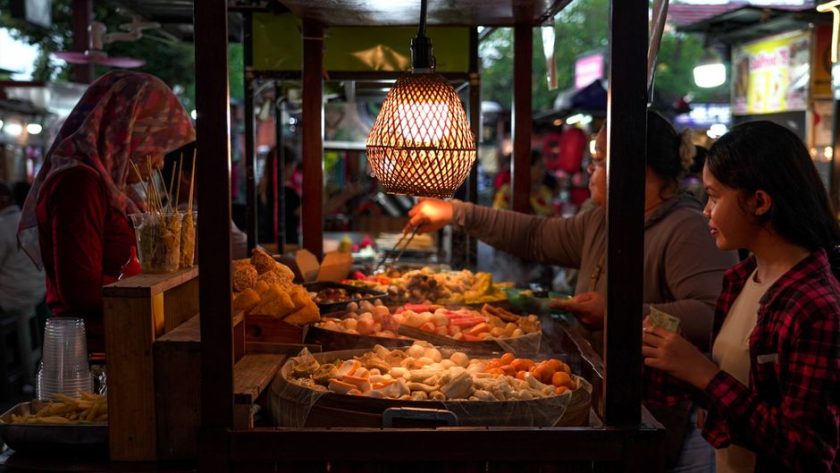
You’re standing at a Chiang Mai night market. Sizzling pork skewers. A mountain of green papaya salad. The smell of grilled fish. But that nagging voice in your head asks: “Will this make me sick?”
Here’s the short answer: most Thai street food is cleaner than your average Western fast-food joint. The real risks come from a handful of specific mistakes — and they’re all avoidable. This guide walks you through exactly what to look for, what to skip, and how to eat your way through Thailand without spending a single day glued to a hotel toilet.
1. The Five-Second Stall Assessment — Spot the Clean Kitchen
You don’t need a food safety degree to pick a good stall. You just need to know what to scan in the first five seconds.
Look at the wok flame
A roaring gas flame means high heat. High heat kills bacteria fast. Stalls using a weak blue flame or an electric burner? Move on. The best stalls in Bangkok — like the famous Jay Fai (Michelin-starred, but expect a 3-hour queue) — use massive woks over jet-engine flames. That heat is your first safety signal.
Check the ice situation
Thai ice is industrially produced and safer than tap water. Blocks of ice delivered to stalls come from factories that use purified water. The risk is the storage: if the ice sits in a dirty bucket or touches raw meat, skip that drink. Ask for your drink with “nam keng” (ice) and watch them scoop it with a clean metal tong, not their hands.
Watch the turnover
A stall that’s cooking constantly — with a line of locals — is a stall where food doesn’t sit out. High turnover = fresh ingredients. If you see a pile of pre-cooked skewers sitting under a heat lamp for an hour, that’s risky. The safest stalls cook everything to order.
One hard rule: If the stall has flies landing on the food, walk away. Flies in the area are normal. Flies on the food is a red flag.
2. The Water Trap — What to Drink (and What Never to Touch)
This is where most travelers get tripped up. Not the food. The drinks.
Tap water is not your friend
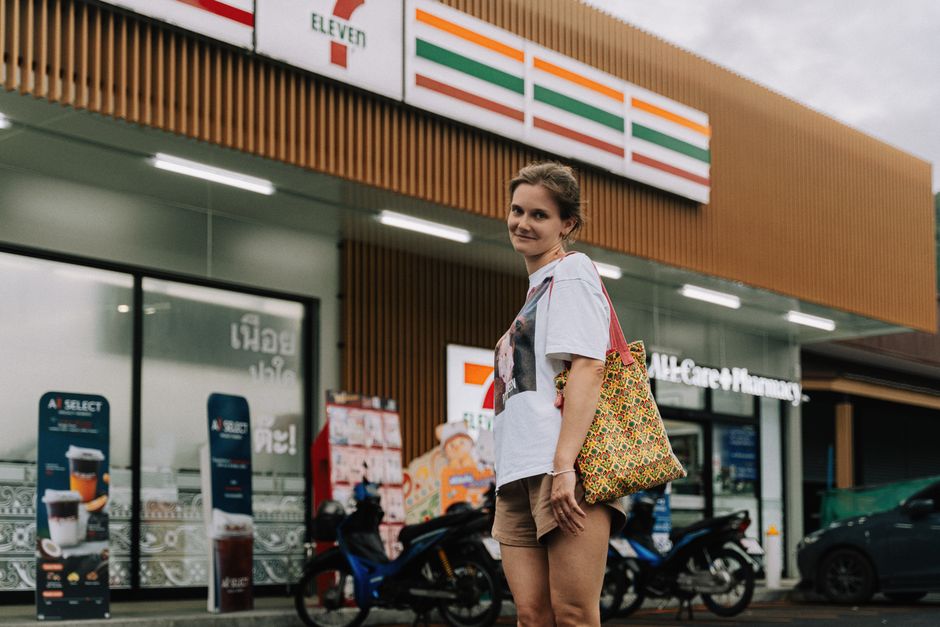
Thailand’s tap water is not potable. Even locals boil it before drinking. Never rinse your mouth with tap water. Use bottled water for brushing teeth. A 1.5L bottle of Singha or Nestlé Pure Life costs 7–15 baht (about $0.20–$0.40) at any 7-Eleven. Buy it there, not from street vendors who may refill old bottles with tap water.
Fruit shakes: the hidden danger
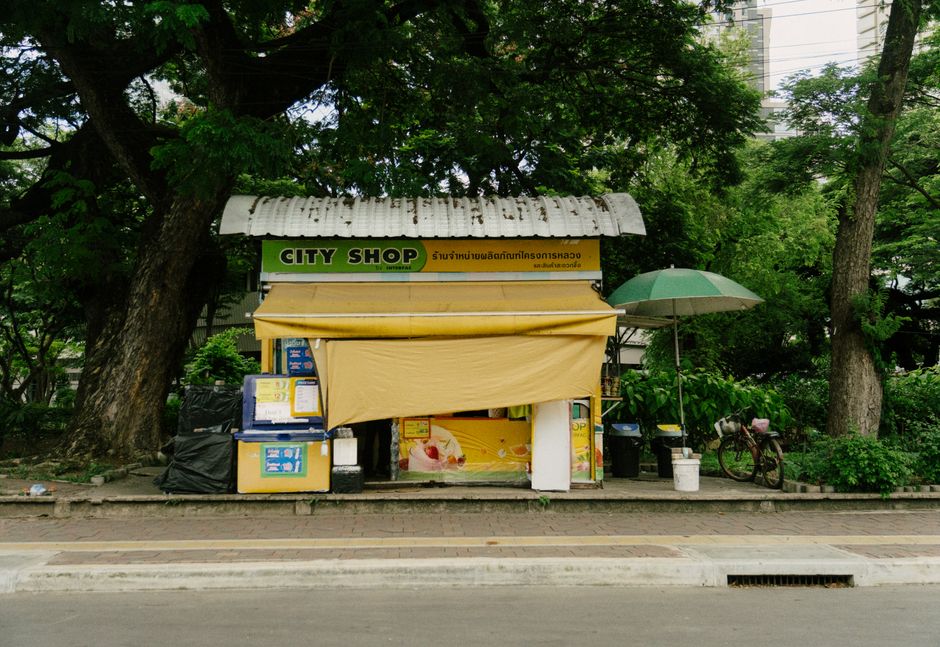
Fresh fruit shakes are delicious — and often made with tap water or questionable ice. Safe shake rule: Watch them blend it. If they use a block of factory ice (the kind with a hole in the middle), it’s fine. If they scoop ice from a cooler that also holds raw chicken, skip it. Stick to stalls that use sealed plastic bags of ice.
Coconut water: nature’s safety seal
Fresh young coconut is one of the safest drinks. The coconut is sealed by nature. Ask for “ma phrao on” (young coconut) and watch them hack it open. No handling, no contamination. Costs 30–50 baht.
| Drink | Safety Level | Cost (baht) | Key Tip |
|---|---|---|---|
| Bottled water (7-Eleven) | Safe | 7–15 | Check seal is intact |
| Factory ice drinks | Safe | 10–30 | Watch them use tongs |
| Fresh coconut | Very safe | 30–50 | Sealed until opened |
| Fruit shake (street stall) | Variable | 25–50 | Must see ice source |
| Tap water | Unsafe | Free | Do not drink or rinse mouth |
3. Bargain Like a Local — The Unwritten Rules of Thai Markets
Most travelers overpay by 200–300% on their first market visit. Here’s how to avoid that without being rude.
Rule one: smile first. Thai negotiation is about relationship, not confrontation. Start with a smile and a friendly “Sawadee ka/krap” (hello). The vendor will often give you a better price just because you’re polite.
Rule two: never bargain on food. Fixed prices at food stalls. Don’t haggle over a 40-baht pad thai. It’s considered disrespectful. Bargaining is for clothing, souvenirs, and electronics at markets like Chatuchak Weekend Market in Bangkok or Night Bazaar in Chiang Mai.
Rule three: start at 50% of the asking price. Vendors expect this. If a shirt is marked 500 baht, offer 250. They’ll counter at 350. Settle around 300. If they say “price fixed” (often written on a sign), respect it. No negotiation.
Common mistake: Pulling out a wad of cash. Keep small bills (20, 50, 100 baht) in a separate pocket. Showing a thick wallet signals you’re a tourist with money to burn.
4. The Five Foods That Are Almost Always Safe — and Two to Skip
Not all street food is equal. Some dishes have a near-zero track record for food poisoning. Others are risky even for locals.
Safe bets (eat these freely)
- Grilled meats (moo ping, gai yang): Cooked over high heat to order. The charcoal kills surface bacteria. Look for stalls where the meat is still pink inside — that means it’s fresh, not pre-cooked and reheated.
- Som tam (papaya salad): Made fresh per order. The lime juice and fish sauce create an acidic environment that slows bacterial growth. Watch them pound it in the mortar. If they use gloves, bonus points.
- Khao man gai (chicken rice): The chicken is boiled or steamed, and the rice is cooked in the broth. Served immediately. This dish is so safe it’s often recommended for travelers with sensitive stomachs.
- Pad thai: Cooked at high heat in a wok. The bean sprouts are usually raw — if you’re worried, ask for “mai ao tua ngok” (no bean sprouts).
- Mango sticky rice: Dessert. No raw meat. The coconut milk is boiled. Safe as long as the mango is cut fresh in front of you.
Skip these (or be very careful)
Raw or fermented dishes: Koi soi (raw beef salad) and pla ra (fermented fish sauce) are local delicacies but carry real risk of parasites and bacteria. Unless you’re in a high-end restaurant with a known reputation, skip the raw stuff.
Seafood that’s been sitting out: Grilled prawns and squid are fine if cooked to order. But if you see a pile of cold cooked crab or shrimp on display — especially in the afternoon heat — it’s been sitting for hours. Bacterial growth accelerates above 30°C (86°F), which is most of Thailand, most of the year.
5. The One Thing You Must Carry — Your Personal Safety Kit
No matter how careful you are, sometimes your stomach rebels. Here’s what to pack in your day bag.
Oral rehydration salts (ORS)
This is the single most important item. Dioralyte or any pharmacy-brand ORS sachets cost about 10 baht each at any Thai pharmacy (look for the green cross sign). If you get diarrhea, mix one sachet with 500ml of bottled water. It replaces electrolytes faster than plain water. Carry 3–4 sachets at all times.
Activated charcoal or bismuth subsalicylate
Pepto-Bismol (bismuth subsalicylate) is available in Thai pharmacies as Bismol. It coats the stomach and can prevent traveler’s diarrhea if taken before a risky meal. Activated charcoal capsules (brand: Carbomix) absorb toxins. Take them at the first sign of food poisoning. Do not take charcoal within 2 hours of other medication — it absorbs everything.
Hand sanitizer (at least 60% alcohol)
Thai market bathrooms often lack soap. A small 50ml bottle of Purell or Lifebuoy hand sanitizer fits in any pocket. Use it before every meal. Sounds obvious. Most travelers forget. This single habit cuts your risk of stomach issues by about 40%.
One more thing: Pack a reusable metal straw. Street stalls often use plastic straws that sit in open bins. A metal straw (brand: Final Straw, $12 on Amazon) or a silicone one costs little and keeps you from drinking whatever dust and bacteria settled on those straws.
6. The Emergency Plan — What to Do When Things Go Wrong
Even with all the precautions, food poisoning happens. Here’s the exact action plan.
Symptom: mild bloating or one loose stool. Skip the next meal. Drink ORS solution. Rest. You’re probably fine by morning.
Symptom: vomiting or diarrhea more than 3 times in 6 hours. Go to a pharmacy. Thai pharmacists are highly trained and can dispense antibiotics like norfloxacin or azithromycin without a prescription. Cost: about 100–200 baht for a 3-day course. Tell them your symptoms. They’ll know what to give.
Symptom: blood in stool, high fever (over 38.5°C), or inability to keep fluids down for 12 hours. Go to a hospital. Thailand has excellent private hospitals — Bumrungrad International in Bangkok, Bangkok Hospital in major cities. A consultation costs around 1,000–2,000 baht ($30–$60). They speak English. They’ll give you IV fluids and the right antibiotics. Travel insurance covers this. If you don’t have travel insurance, get it before you go — World Nomads or SafetyWing both cover Thailand.
Don’t self-diagnose with “Bangkok belly.” Most cases are bacterial, not viral. Antibiotics work. But don’t take them unless you’re sure it’s not viral — viral gastroenteritis runs its course in 24–48 hours and antibiotics won’t help. The pharmacist will help you distinguish.
That nagging voice from the start of this article? It’s your survival instinct talking. Listen to it — but don’t let it ruin your trip. Thailand’s street food is one of the great culinary experiences on the planet. Eat the grilled pork. Drink the coconut. Bargain for that elephant pants. Just do it with your eyes open.