Which Thailand festival is actually worth rearranging your entire trip schedule for — and which ones look better in photographs than they do in person?
That question matters before you book anything. Thailand has dozens of festivals, but a handful of them have a measurable impact on accommodation prices, transport availability, and the character of entire cities. Knowing the difference between a tourist-polished photo event and a genuinely transformative cultural experience can save you weeks of planning headaches and several hundred dollars.
Thailand Festival Calendar: Dates, Locations, and Crowd Levels
Lock these dates in before you set any flights. Each festival has a different crowd profile — some transform entire cities overnight, others are regional events most international travelers never find.
| Festival | Month | Primary Location | Crowd Impact | Book Accommodation |
|---|---|---|---|---|
| Songkran (Thai New Year) | April 13–15 | Chiang Mai, Bangkok (Silom) | Extreme — city-wide | 3–4 months ahead |
| Yi Peng (Lantern Festival) | November full moon | Chiang Mai | Very High | 4–6 months ahead |
| Loi Krathong | November (same night as Yi Peng) | Sukhothai, Bangkok | High | 2–3 months ahead |
| Phi Ta Khon (Ghost Festival) | June–July (date varies annually) | Dan Sai, Loei Province | Moderate — mostly domestic | 4–6 weeks ahead |
| Phuket Vegetarian Festival | October (9 days) | Phuket Town | Moderate | 6–8 weeks ahead |
| Bun Bang Fai (Rocket Festival) | May | Yasothon | Low — overwhelmingly domestic | 2–4 weeks ahead |
| Royal Ploughing Ceremony | May | Bangkok (Sanam Luang) | Low | No advance booking needed |
When High Season Becomes Impossible to Book
Songkran in Chiang Mai is the clearest example of festival price compression. Hotels near Nimmanhaemin Road and the Old City moat charge 3–4x their standard rates during April 13–15. Budget guesthouses that run 400 THB per night in February hit 1,500–2,000 THB. A midrange hotel at 1,200 THB normally climbs to 3,500–5,000 THB. The same pattern applies to Yi Peng — any guesthouse within walking distance of the Ping River fills months ahead. These aren’t anecdotal spikes. They’re consistent year-over-year.
Sukhothai is a different calculation. Its Loi Krathong celebration — held at a UNESCO-listed historical park — is considered more authentic than Bangkok’s version. Accommodation is limited, but price spikes are less severe because most visitors day-trip from Phitsanulok, 60km away, rather than overnighting.
The Festivals That Don’t Require Much Planning
Phi Ta Khon and Bun Bang Fai attract almost exclusively domestic Thai tourists. That means real cultural depth with almost no English-language tourist infrastructure — fewer crowds, cheaper accommodation, and a genuinely unmediated experience. The tradeoff is logistics. Dan Sai (Phi Ta Khon) requires a regional bus or rental car from Loei City. Yasothon (Bun Bang Fai) sits 7–8 hours by VIP bus from Bangkok’s Ekkamai terminal, roughly 350–400 THB each way. These events reward travelers who treat transport as part of the experience, not an obstacle to it.
Songkran in Chiang Mai: What Actually Happens vs. What You Expect
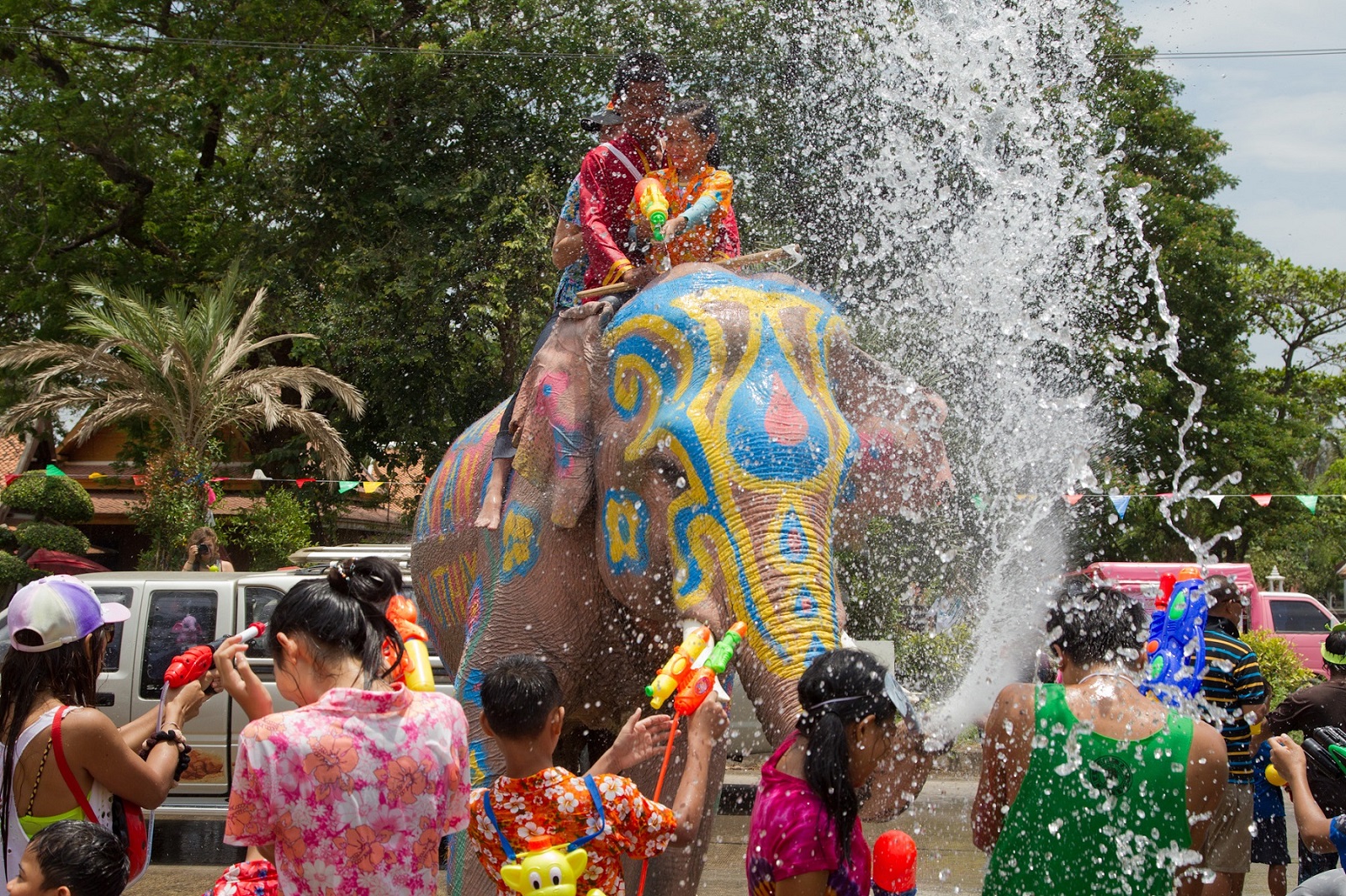
Songkran is Thailand’s most internationally recognized festival. Chiang Mai is its most intense venue. For three days in mid-April, the city becomes a full-scale water fight. That description is accurate but incomplete.
The water is not optional. You will be soaked within two minutes of leaving your accommodation. Pickup trucks with water tanks, street vendors with buckets, tourists with high-pressure Super Soakers, and locals with garden hoses all participate continuously from around 10am to 6pm. People who attempt to walk to a restaurant during peak hours without accepting they will get wet do not succeed.
Chiang Mai vs. Bangkok: Which Songkran Is Worth the Flight?
Bangkok’s Songkran concentrates on Silom Road and Khaosan Road. It’s enormous, loud, and heavily international. Crowd counts on the main Silom stretch exceed several hundred thousand people on peak days. This works if you’re already based in Bangkok — the festival comes to you.
Chiang Mai’s version has a different character. The Old City moat becomes the primary battleground, and the celebration runs longer (some neighborhoods start a day early, some continue a day after). Thai families and local businesses participate at the same energy level as tourists. It feels embedded in the city rather than cordoned off for visitors.
There’s a documented downside worth knowing before you book: April is the hottest and smokiest month in Northern Thailand. Temperatures regularly hit 38–40°C, and Chiang Mai has a consistent air quality problem during this period from agricultural burning in surrounding provinces. The AQI index can spike to unhealthy levels (150+) during the same weeks as Songkran. For travelers with respiratory sensitivities or low heat tolerance, Bangkok’s Songkran is the practical choice — not a lesser version, just a different operating environment.
Three Mistakes First-Timers Make at Songkran
- Carrying unprotected electronics. A waterproof phone pouch is non-negotiable near the moat. The Hiearcool universal waterproof pouch (available throughout Chiang Mai markets for around 150–200 THB) handles most phones. LOKSAK brand dry bags offer higher-grade protection if you’re carrying a camera. Phones in pockets without protection do not survive the moat zone.
- Booking accommodation outside the main celebration area. Staying more than 15 minutes on foot from the Old City moat or Nimmanhaemin Road means missing the density of participation that defines the festival. Distance here doesn’t mean quiet — it means excluded.
- Arriving on April 15 expecting full festival intensity. April 13 is the peak day. April 14 is strong. By April 15, activity drops noticeably in most areas. If you only have one day in Chiang Mai for Songkran, April 13 is the day.
Yi Peng vs. Loi Krathong: The Verdict
Book Yi Peng in Chiang Mai. The sky lantern release — thousands of paper lanterns ascending simultaneously over the Ping River — happens here and almost nowhere else at that scale. Loi Krathong (the floating candle offering on water) happens the same night across all of Thailand, including Sukhothai and Bangkok, and both are genuinely beautiful. But if you’re choosing one November festival and one city, Yi Peng wins on visual impact without qualification. Sukhothai’s historical setting adds meaning; Chiang Mai’s lantern-filled sky adds spectacle. Only one of those is completely unreplicable.
Thailand Festivals Most International Travelers Never Find
The three festivals below get a fraction of the coverage they deserve. Each offers something the headline events cannot.
Phi Ta Khon (Ghost Festival) — Dan Sai, Loei Province
Phi Ta Khon is a Buddhist merit-making festival where residents of Dan Sai dress in elaborate ghost costumes constructed from traditional sticky rice steamers and layered hand-painted fabric. The date is determined each year by the local senior monk — it falls somewhere in June or July and is announced weeks in advance. This is not a Chiang Mai-level tourist operation. Costumes are entirely handmade by families who’ve been making them for generations. The music is live traditional percussion. The street procession runs through a town where the total guesthouse count is under 20 properties.
English-language signage is sparse. Most vendors don’t speak tourist English. That is exactly what makes it worth the trip. This is a regional Thai festival that hasn’t been restructured for international visitors. The crowd is 95% Thai domestic tourists, which gives you the rare experience of attending a festival as a participant observer rather than a ticketed demographic. For travelers who have already done Songkran and Yi Peng, Phi Ta Khon is the correct next festival to prioritize.
Bun Bang Fai (Rocket Festival) — Yasothon
Every May, communities across Isan (Northeastern Thailand) launch handmade bamboo rockets to petition the sky gods for rain before rice-planting season begins. In Yasothon, the rockets reach 25–30 meters in length. Teams from across the region compete on distance and flight style. The party surrounding the launch site is enormous — food vendors, traditional mor lam music (a form of call-and-response singing specific to Isan), and an atmosphere of extended community celebration that runs across the entire weekend.
Yasothon isn’t on most Thailand itineraries. The VIP bus from Bangkok’s Ekkamai terminal takes 7–8 hours and costs around 350–400 THB. The investment makes sense for travelers who’ve exhausted the standard circuit and want something genuinely off-track.
Phuket Vegetarian Festival — Phuket Town
Nine days in October. Chinese-Thai Taoist devotees observe strict vegetarian diets and some undergo ritual acts — walking on fire, climbing ladders with bladed rungs, piercing cheeks with large metal skewers — as religious devotion. This practice dates to at least the 1820s and is completely genuine. The processions through Phuket Town are dense, accompanied by continuous firecrackers for much of the route, and unlike anything else in Thailand’s festival calendar.
One critical logistics note: if you’re visiting Phuket primarily for beach access, the Vegetarian Festival is in Phuket Town, which is geographically separate from Patong Beach and the main resort belt. The festival has no connection to beach tourism. Plan to base yourself in Phuket Town for the festival days.
How to Build a Trip Around a Thailand Festival
Booking in the wrong order causes most of the planning failures. Here is the correct sequence:
- Lock the festival date before anything else. Songkran is fixed at April 13–15. Yi Peng follows the November full moon and shifts slightly year to year. Phi Ta Khon’s date isn’t announced until 4–6 weeks ahead. Confirm the date before setting any other travel commitments.
- Book accommodation before flights. This contradicts standard travel planning instincts, but during peak festivals, accommodation in festival cities sells out months before airfare prices move. Secure a confirmed hotel room first. Then build flights around it.
- Arrive the day before the festival opens. Travel into any major festival city is chaotic. Arriving one day early lets you orient, find food without festival-day crowds, and buy any supplies you need before street vendors are overwhelmed.
- Book your departure for the day after the festival officially ends. On the final day of Songkran, hundreds of thousands of people attempt to leave Chiang Mai simultaneously. Flight prices on that day spike. Departing the following day, when demand drops sharply, is cheaper and less stressful.
- Build the accommodation price spike into your total budget from the start. A hostel bed that normally costs 250 THB will run 600–900 THB during Songkran. A midrange hotel at 1,200 THB standard rate will charge 3,500–5,000 THB. These aren’t outliers — they’re the market rate during festival weeks.
Booking Questions That Actually Affect Your Experience
How far ahead do I need to book Yi Peng accommodation in Chiang Mai?
Four to six months minimum for anything near the Ping River or the Night Bazaar area. The organized mass lantern release events — run by private companies near Mae Jo University, about 15km north of the city — sell out in the same window, at prices ranging from 800 to 2,000 THB per person depending on the organizer and seating tier. The free community releases along the riverbanks and in temple grounds don’t require tickets, but you need to be physically positioned near Mae Ping River well before dark. Arrive by 6pm at the latest for a good vantage point.
Is a hotel on the main Songkran street worth the premium?
Yes — specifically if the room has a balcony or elevated view. The ability to watch the water fight from above, then retreat to dry off and change, is operationally different from being in the street without a nearby base. Hotels like Tamarind Village and Rachamankha inside Chiang Mai’s Old City charge significant premiums during festival week. Their location value is real, not just convenient. For a single major festival visit rather than a repeat trip, the premium justifies itself.
Can tourists participate in the Yi Peng sky lantern release?
Two distinct tiers exist. The large commercial events near Mae Jo University are designed specifically for international tourists — organized, photogenic, and ticketed. The community releases in temple courtyards and along the Ping River are open to anyone who shows up and are free. The commercial events guarantee a synchronized mass-launch moment. The community releases are smaller and less coordinated, but they’re what the festival actually is when you remove the ticketing infrastructure. Both are worth experiencing; the community release gives you context for understanding what the commercial version is a scaled-up version of.
On-the-Ground Logistics Most Festival Guides Skip
Knowing a festival exists is not the same as being ready for it physically.
What to Carry and What to Leave at the Hotel
For Songkran: carry only items that can get completely soaked or are inside a dry bag. Cash in a ziplock bag. Phone in a waterproof case rated to at least 1 meter depth — the Hiearcool universal pouch handles this at around 150–200 THB, and Pelican-brand cases offer higher protection for cameras. Leave your passport, non-waterproof electronics, and any wallet that isn’t designed for submersion. The moat zone is a complete water environment for several continuous hours.
For Yi Peng and Loi Krathong: crowd density along the Ping River is high enough that pickpocketing is a documented issue, particularly during the lantern release when attention is directed upward. Front-pocket placement, a zippered crossbody bag, or a money belt reduces your exposure. Establish a physical meet-up point with your group before you enter the main crowd — phone signal becomes unreliable when thousands of people are using it simultaneously in a small area.
Getting Around During Festival Closures
During Songkran, streets around the Old City moat in Chiang Mai are partially closed to vehicle traffic. Grab (Thailand’s dominant rideshare app, functionally equivalent to Uber) still operates but applies surge pricing throughout the festival days. Rental scooters — normally the fastest way to navigate Chiang Mai — are genuinely inadvisable during peak water fight hours. Visibility is compromised by water, and vehicle traffic in the festival zone is dangerous. Walk or take a covered vehicle.
For Loi Krathong at Sukhothai Historical Park: vehicle access closes during peak festival hours. Walking or renting a bicycle at the park entrance (30–50 THB per day from vendors at the main gate) is standard practice. The light and sound show at the historical park runs for approximately two weeks around the actual festival date, which gives you scheduling flexibility. If the main night feels too crowded, the surrounding nights offer almost the same visual experience with significantly smaller crowds.
What Consistently Ruins First-Timers’ Festival Experience
Underestimating the physical demand. Songkran is a full-contact event in 38–40°C heat that runs for six to eight hours. Yi Peng requires standing in a dense crowd for two to three hours before the main release. Phi Ta Khon’s processions cover several kilometers on unpaved roads in June humidity that sits around 80%.
Build recovery time into your itinerary. Don’t schedule a festival as one day in a packed itinerary — give it a buffer day before and after. The day after Songkran, most of Chiang Mai’s restaurants and shops either close or run reduced hours. Have a food backup plan for that morning. The travelers who consistently report the best festival experiences treated each event like a physical undertaking requiring preparation, not a backdrop for photography.
Thailand’s festival calendar rewards the travelers who research below the headline events. The visitors discovering Phi Ta Khon in Dan Sai and Bun Bang Fai in Yasothon right now are accessing experiences that Songkran, for all its spectacle, can no longer offer: a festival that hasn’t yet been optimized for them. That window doesn’t stay open forever.