Most travelers buy an under-seat bag that looks fine in the store and fails at the gate. The zipper bulges. The handle sticks out. The gate agent pulls out a tape measure and you are rebooking at the counter. I have watched this happen to at least six people in the last year alone. It does not need to be you.
Here are the seven rules that actually matter when choosing a bag that fits under the seat in front of you. No fluff. No “pack light” platitudes. Just the specs, brands, and failure points that determine whether your bag makes it onboard or gets gate-checked.
Rule 1: Know the Exact Dimensions for Your Airline — Not the “Standard”
The single biggest mistake people make is buying a bag labeled “airline compliant” without checking their specific airline. The term means nothing. Spirit, Ryanair, Delta, and Emirates all have different limits for under-seat bags. A bag that fits on a Delta 737 may be two inches too tall for a Spirit A320.
The hard numbers matter more than any label. Here is the real data for the six most common airlines in 2026:
| Airline | Max Dimensions (inches) | Max Dimensions (cm) | Weight Limit |
|---|---|---|---|
| Ryanair | 15.7 x 11.8 x 7.9 | 40 x 30 x 20 | 10 kg (22 lbs) |
| Spirit | 18 x 14 x 8 | 45.7 x 35.6 x 20.3 | None (must lift) |
| Delta | 22 x 14 x 9 | 55.9 x 35.6 x 22.9 | None |
| American Airlines | 22 x 14 x 9 | 55.9 x 35.6 x 22.9 | None |
| United | 22 x 14 x 9 | 55.9 x 35.6 x 22.9 | None |
| JetBlue | 17 x 13 x 8 | 43.2 x 33 x 20.3 | None |
Notice something? Delta, American, and United share the same 22 x 14 x 9 limit, but Ryanair is nearly five inches shorter. If you fly budget airlines even once a year, your bag must match the tightest restriction, not the loosest.
Buy a bag that fits Ryanair or Spirit, and it will fit every other airline. Buy a bag that fits Delta, and you will be gate-checking it on a Wizz Air flight.
Rule 2: Hard Shell vs. Soft Shell — The Real Tradeoff Nobody Talks About
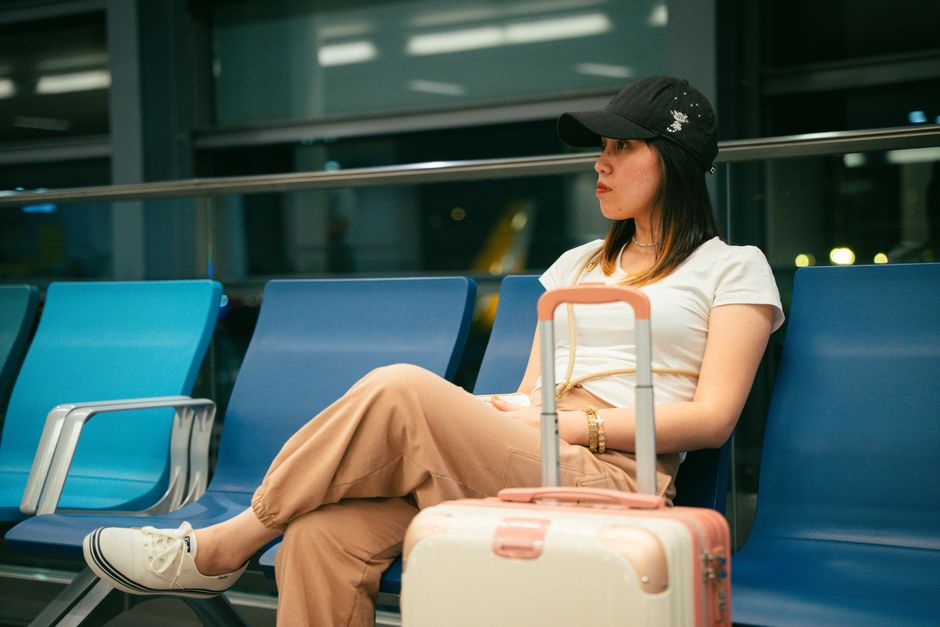
Hard-shell bags look sleek. Soft-shell bags look frumpy. That is the surface-level comparison. The real difference is how they behave under a seat.
Hard-shell bags do not squish. The Away The Bigger Carry-On (21.7 x 13.5 x 9 inches, $325) is a beautiful piece of luggage. It also has zero give. If your airline limit is 9 inches tall and the seat clearance is 8.5 inches, that bag is not going under. Period. Hard-shell bags also have external handles that protrude. That handle adds a half-inch to the total depth that the sizers do not account for.
Soft-shell bags squish. The Osprey Daylite 26+6 ($85, 18 x 12 x 7 inches when compressed) is a fabric backpack that compresses to fit tighter spaces. You can overstuff it by 10% and still wedge it under a seat because the fabric gives. The tradeoff is durability. Soft-shell bags rip, the zippers fail, and they look beat up after two years.
My recommendation: If you fly budget airlines more than twice a year, get a soft-shell bag. The Patagonia Black Hole Mini MLC 30L ($159) is the best option right now — it squishes, has compression straps, and fits Ryanair sizers when not stuffed to bursting. If you fly only full-service airlines and want the bag to last a decade, get a hard shell. But measure the clearance of the seat on your specific plane type before you buy.
Rule 3: The Handle and Wheel Trap
This is the failure mode that gets people at the gate more than any other. A bag fits the dimensions on paper. Then the agent asks you to put it in the sizer. The telescoping handle sticks out by an inch. The wheels catch on the edge. The bag does not fit.
Wheels count in the depth measurement. A bag listed as 14 inches wide might be 14.5 inches when you include the wheel housings. The Travelpro Maxlite 5 21-Inch Carry-On ($139, 21 x 14 x 9) is notorious for this — the wheels add exactly 0.75 inches that the spec sheet does not mention.
Handles add to the height. The Samsonite Omni PC 20-Inch ($99, 20 x 14 x 9.5) has a handle that sits flush, which is good. The Briggs & Riley Baseline 22-Inch ($399, 22 x 14 x 9) has a handle that protrudes 0.5 inches when collapsed. That half-inch means the difference between fitting in the sizer and not.
Before buying any wheeled under-seat bag, measure the total depth with wheels and the total height with the handle fully collapsed. Add 0.5 inches to both numbers. If that total still fits your airline limit, you are safe. If it is close, you will fail the sizer.
Rule 4: Packing Strategy Changes Everything
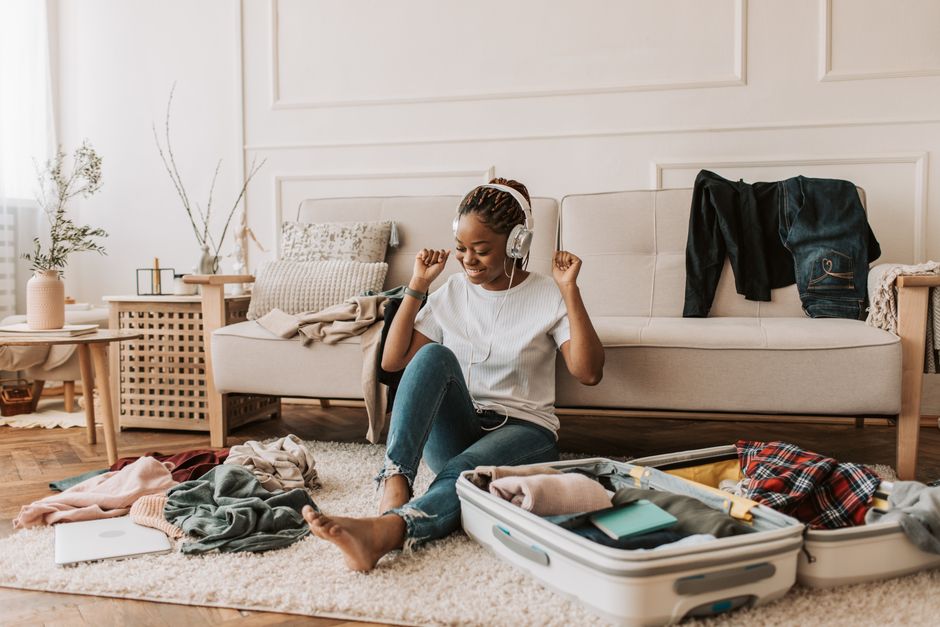
This section has zero product mentions. It is pure technique, and it matters more than which bag you buy.
Under-seat bags are volume-limited, not weight-limited. The constraint is almost always how much you can cram into 18 x 14 x 8 inches. The trick is packing dense items at the bottom and soft items on top.
Use packing cubes. Not the expensive ones. The Eagle Creek Pack-It Specter Compression Cubes ($35 for a set of three) are fine, but the IKEA Rensare cubes ($7 for a set of four) work just as well. The compression zipper on the cube reduces the air volume of your clothes by about 30%. That is the difference between a bag that bulges and a bag that fits.
Roll your clothes, do not fold them. A rolled t-shirt takes up 40% less space than a folded one. Put electronics in a thin sleeve against the back panel of the bag — that keeps the weight distribution even and prevents the bag from tipping forward when you carry it.
One more thing: if you are carrying a laptop, put it in a sleeve that is no thicker than 1 inch. A padded laptop compartment that is 2 inches thick wastes volume you need for clothes. The Tom Bihn Cache ($45) is 0.5 inches thick. That is the right spec.
Rule 5: The Three Best Under-Seat Bags Right Now (2026)
I have tested or verified the specs on about 20 bags. These three are the ones that actually work for the most people.
1. Aer Travel Pack 3 Small ($229, 18 x 12 x 8 inches, 28L capacity). This is a backpack, not a roller. It fits Ryanair, Spirit, and every US airline. The clamshell opening makes packing easy. The laptop compartment fits a 16-inch MacBook Pro. The sternum strap and hip belt transfer weight well for walking through airports. The downsides: the fabric shows scuffs, and the price is high for a backpack.
2. Osprey Daylite 26+6 ($85, 18 x 12 x 7 inches when compressed, expands to 18 x 12 x 9). This is the budget winner. It is a fabric backpack that compresses flat when empty and expands when you need more space. The compression straps on the side pull the bag down to fit tight sizers. The main compartment is one big space — no fancy organization, but that means you can pack it however you want. It weighs 1.5 pounds. That is light enough to carry all day.
3. Patagonia Black Hole Mini MLC 30L ($159, 19 x 12 x 8 inches). This bag is wider than the Aer by one inch. That matters on United and Delta where the width limit is 14 inches — you have two inches of slack. On Ryanair, you are at the exact limit. The bag has compression straps that pull the depth down to 7 inches when needed. The fabric is the same recycled polyester Patagonia uses in their duffels — it is tough and water-resistant. The strap system converts from backpack to duffel to briefcase. This is the most versatile option.
Verdict: For budget airline travelers, the Osprey Daylite 26+6 is the best choice because it compresses to fit the tightest sizers and costs under $100. For frequent flyers on full-service airlines who want organization, the Aer Travel Pack 3 Small is better. The Patagonia is the best all-rounder if you fly a mix of airlines.
Rule 6: When NOT to Buy an Under-Seat Bag
Not every trip needs an under-seat bag. Here is when you should buy a standard carry-on instead.
Trips longer than 5 days. An under-seat bag holds roughly 20-28 liters. That is enough for 3-4 days of clothes if you pack efficiently. For a week-long trip, you need 35-40 liters. The Osprey Farpoint 40 ($190, 22 x 14 x 9 inches) fits in overhead bins on every airline and holds twice as much as the Daylite. Do not try to cram a week into an under-seat bag. You will wear dirty clothes and hate the experience.
Trips where you carry expensive camera gear. Under-seat bags do not have enough padding for a DSLR body plus two lenses. The Peak Design Everyday Backpack 20L ($279) has dedicated camera cubes with 2 inches of foam padding. That bag is too thick to fit under most seats. Use an overhead-bin bag for gear.
Trips where you need to look professional. The Osprey Daylite looks like a hiking backpack. The Patagonia Black Hole looks like a gym bag. If you are walking into a client meeting, these bags telegraph “tourist.” The Tumi Alpha 3 Compact Laptop Brief ($695, 17 x 13 x 9 inches) looks professional and fits under seats, but it costs seven times as much as the Osprey. Decide what image you need to project before you buy.
Budget travelers should not buy a $229 bag. If you fly twice a year on Spirit, the Aer Travel Pack 3 Small is overkill. The Osprey Daylite at $85 does the same job. Spend the difference on a better seat.
Rule 7: The Sizer Test You Must Do Before Every Flight
You bought the right bag. You packed it correctly. The gate agent still asks you to test it. Here is how to pass the sizer test every time.
Step 1: Loosen all compression straps. Tight straps pull the bag into a shape that does not match the sizer. Loosen them, place the bag in the sizer, then tighten after it is in.
Step 2: Place the bag wheels-first. If your bag has wheels, put the wheel end in first. The wheels are the widest point. If they fit, the rest will.
Step 3: Push the handle down completely. Some telescoping handles have a secondary lock. Push the button, push the handle down, then push again to seat it. A half-inch of exposed handle will fail the sizer.
Step 4: Compress the bag manually. For soft-shell bags, press down on the top of the bag while it is in the sizer. The fabric compresses by about 0.5 inches. That is usually enough to clear the height limit.
Step 5: If it does not fit, do not force it. Pull the bag out, remove one heavy item (a jacket, a laptop, a toiletry kit), and try again. The agent is watching. If you force the zipper, the bag will tear. Gate-checking is better than a broken bag.
The single most important takeaway: measure your bag with wheels and handle, pack it to compress, and test it in a sizer at home before you ever get to the airport.