
You want to walk where the Founding Fathers argued, where Civil War cannons fired, where Spanish conquistadors built missions. But which city actually delivers that feeling — and which one just sells you a $25 parking pass and a wax museum?
I’ve spent about 15 years bouncing between these places, sometimes for work, sometimes dragging my family along. Here’s the honest breakdown of the cities that feel genuinely historic, not just old.
Boston, Massachusetts: The Walkable Revolution
Boston wins because you can’t escape history. It’s not a district or a block — the whole city breathes it. The Freedom Trail is a 2.5-mile red brick line that connects 16 sites. You’ll hit the Boston Common (1634), the Old North Church (“one if by land, two if by sea”), and Paul Revere’s house.
Skip the touristy Faneuil Hall food court. Instead, walk to the Granary Burying Ground — Samuel Adams, John Hancock, and Paul Revere are buried there. It’s free, quiet, and more moving than any museum.
Budget: Most Freedom Trail sites cost $6–$15 per adult. The Old South Meeting House ($8) is worth it just to stand where the Boston Tea Party was planned. The Boston Tea Party Ships & Museum ($30) is overpriced but fun if you have kids — they get to throw tea crates overboard.
Best time: April–June or September–October. July and August are humid and packed with college tour groups.
What most travelers miss
The Charlestown Navy Yard is a 10-minute walk from the Bunker Hill Monument. You can board the USS Constitution (“Old Ironsides”) for free. Active-duty sailors give the tours. It’s the oldest commissioned warship afloat in the world — launched in 1797.
Philadelphia, Pennsylvania: The City That Argued Us Into Existence
If Boston is where the revolution was felt, Philadelphia is where it was written down. Independence Hall is the room where the Declaration of Independence and Constitution were debated and signed. You need a timed ticket (free, but reserve weeks ahead in summer).
The Liberty Bell is across the street. No ticket needed — just a security line. It’s smaller than you think. That’s fine. The crack tells a real story about casting flaws and 19th-century repair attempts.
Don’t leave without seeing Elfreth’s Alley — the oldest continuously inhabited residential street in the US (built 1702–1720). It’s a two-block cobblestone lane with flower boxes and working-class row houses. No admission fee. Just walk through and imagine daily life before plumbing.
The mistake I made my first visit
I skipped the Museum of the American Revolution because I thought it would be boring. It’s not. The Washington’s War Tent exhibit — the actual tent he used as his mobile headquarters — is the single most powerful artifact I’ve seen in any US history museum. Admission is $24. Worth every dollar.
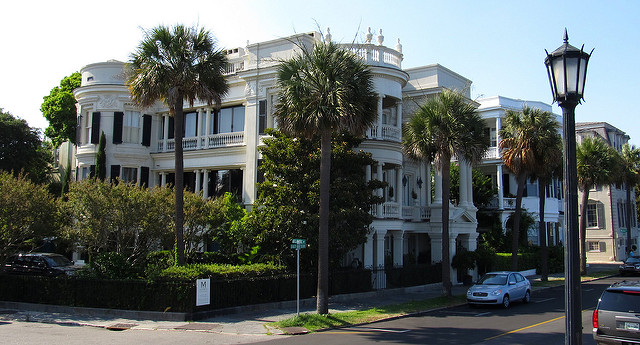
Charleston, South Carolina: Antebellum Beauty With a Heavy Shadow
Charleston looks like a movie set. Pastel row houses, iron gates, church spires. But the prettiest facades hide the ugliest history — this was the center of the American slave trade. Fort Sumter, where the Civil War started, is a 30-minute ferry ride from downtown ($32 round trip). The fort itself is mostly ruins, but the National Park Service rangers give excellent 20-minute talks.
Don’t just do the carriage tours. They’re fine, but they sanitize things. Instead, take the Charleston Slave Market & Black History Walking Tour ($35, 2 hours). It’s run by local guides who don’t sugarcoat the reality of the Old City Market, where enslaved people were once bought and sold.
The Nathaniel Russell House ($15) is the best preserved townhouse from the 1800s — the three-story flying staircase is an architectural trick that still stuns engineers today.
| City | Best Single Historic Site | Cost | Time Needed |
|---|---|---|---|
| Boston | Old North Church | $8 | 2–3 days |
| Philadelphia | Independence Hall | Free (ticket required) | 2 days |
| Charleston | Fort Sumter | $32 ferry + free fort | 3 days |
| Williamsburg | Governor’s Palace | $50 (multi-day pass) | 2 days |
| Santa Fe | Palace of the Governors | $12 | 2 days |
| Savannah | Forsyth Park fountain | Free | 2 days |
| Washington DC | National Archives (original Constitution) | Free | 4+ days |
Williamsburg, Virginia: The Living History Gamble
Colonial Williamsburg is the most immersive historic city in the US. It’s a 301-acre living museum where costumed interpreters churn butter, argue about taxation, and fire muskets. It’s also expensive — a single-day ticket is $50, a three-day pass is $70.
Is it worth it? Yes, if you want to understand how 18th-century people actually lived. The Governor’s Palace (included) is stunning — 20 rooms of period furniture, swords, and a ballroom. The Raleigh Tavern is where Jefferson and his friends drank and plotted revolution.
But here’s the catch: Colonial Williamsburg is a replica. Most buildings were reconstructed in the 1930s. The original foundations are real, but the walls are new. If that bothers you, skip the main area and walk to the Brush-Everard House (one of the few original 18th-century structures on the original site).
Combine it with Jamestown Settlement ($18) and Yorktown Battlefield (free with National Park pass). Those three sites together tell the full early Virginia story.
Santa Fe, New Mexico: The Oldest Capital City
Santa Fe is the oldest state capital in the US, founded in 1610 — a full decade before the Pilgrims landed. The Palace of the Governors on the plaza is the oldest continuously occupied public building in the country. It’s now a museum ($12) covering Native American, Spanish, and Mexican rule before the US took over.
The real draw is the architecture. No building in the historic district is taller than two stories. Everything is adobe — thick mud walls that keep rooms cool in summer and warm in winter. The San Miguel Mission (built 1610–1626) is the oldest church in the US. Mass is still held there. You can walk in for free during the day.
Skip the tourist shops on the plaza. Walk to Canyon Road — it’s lined with art galleries in old adobe houses, and the galleries are free to enter. The Georgia O’Keeffe Museum ($13) is small but excellent if you want to see her New Mexico landscapes.
Santa Fe sits at 7,200 feet elevation. Drink water. The dry air and altitude will hit you harder than you expect.
Savannah, Georgia: The Squares Where Sherman Stopped
Savannah has 22 squares — small parks with fountains and monuments, laid out in 1733. The squares are why the city survived the Civil War relatively intact. When General Sherman marched through Georgia, he spared Savannah because he liked the layout. True story.
The Forsyth Park fountain is the iconic photo spot. It’s a 30-acre park with walking paths and a Confederate memorial that actually lists names — worth reading. The Cathedral of St. John the Baptist (free) has stained glass windows that look like they belong in Europe.
Don’t pay for the ghost tours. They’re mostly fiction. Instead, take the Savian History Walking Tour ($25, 90 minutes) that focuses on the real stories — the 1820 fire, the yellow fever epidemic, and the city’s role in the cotton trade.
Best time: March–May. The azaleas bloom, and the humidity hasn’t hit yet. Avoid August. It’s brutal.
What About Washington DC?
I get this question constantly. Yes, DC is historic. The National Mall has the Lincoln Memorial, the Washington Monument, the Vietnam Veterans Memorial. The National Archives holds the original Declaration, Constitution, and Bill of Rights — all free to see.
But DC feels like a capital, not a historic city. The history is curated, displayed in museums, not lived in the streets. The Smithsonian museums are world-class and free, but they’re museums. If you want to feel history in the cobblestones and the air, pick Boston or Charleston over DC.
That said, if you go to DC, book the Library of Congress tour (free, but reserve online). The Main Reading Room is the most beautiful room in the city. And the Ford’s Theatre ($10) is a solid half-day visit — you’ll stand near the box where Lincoln was shot.
How to Pick the Right One for Your Trip
You can’t do all seven in one trip. That’s a disaster. Here’s how to choose:
- First-time US history trip? Boston + Philadelphia. Four days total. Fly into Boston, take the Amtrak to Philly (5 hours, $70).
- Want the South? Charleston + Savannah. They’re 2 hours apart by car. Four days is plenty.
- Bringing kids? Williamsburg + Jamestown. The hands-on stuff keeps them engaged. Budget $100 per day for tickets.
- Architecture lover? Santa Fe. The adobe style is unlike anywhere else in the US. Three days is enough.
- Budget traveler? Washington DC. All the Smithsonian museums are free. You can spend a week there for the cost of a hotel and food.
One last thing: don’t try to see everything. Pick two or three sites per day. Walk slow. Read the plaques. Talk to the park rangers — they know more than any guidebook. That’s how you actually connect with the history, not just check boxes.