
I spent three years bouncing between eco-lodges in Costa Rica, and I can tell you this: most of them are not worth the premium they charge. The term “eco-friendly” gets slapped on everything from a concrete block with a recycling bin to a genuine off-grid rainforest retreat. After staying at over twenty properties, I’ve narrowed it down to five that actually walk the talk. Here are the real reviews and 2026 pricing.
What Makes a Hotel Actually Eco-Friendly in Costa Rica?
Certifications matter more here than anywhere else I’ve traveled. Costa Rica’s CST (Certification for Sustainable Tourism) system ranks properties from 1 to 5 leaves. A 5-leaf rating means the hotel runs on renewable energy, treats its wastewater, sources 90%+ of food locally, and employs from the surrounding community. Anything below 3 leaves is basically greenwashing.
I also look for three specific things before booking:
- Carbon offset program that’s third-party verified (not just a checkbox on their website)
- Single-use plastic ban enforced at every level — no plastic water bottles, no plastic straws, no plastic key cards
- Local hiring with fair wages, not just one or two guides from the village
If a hotel can’t show you their CST certificate number on request, I’d walk. I’ve had front desks mumble something about “being in the process” — that means they haven’t passed the audit.
Top 5 Eco-Boutique Hotels: The Short Verdict
Here’s the table I wish I had before my first trip. These are the properties that passed my personal audit, with real 2026 prices.
| Hotel | Location | CST Rating | Price per Night (2026) | Best For |
|---|---|---|---|---|
| El Silencio Lodge & Spa | Bajos del Toro | 5 leaves | $450–$700 | Cloud forest immersion, couples |
| Lapa Rios Lodge | Osa Peninsula | 5 leaves | $550–$900 | Wildlife, hardcore eco-travelers |
| Nayara Tented Camp | Arenal | 4 leaves | $650–$1,100 | Luxury with volcano views |
| Florblanca Resort | Nosara | 4 leaves | $380–$600 | Surf + yoga, solo travelers |
| Pacuare Lodge | Pacuare River | 5 leaves | $500–$800 | Adventure, white-water rafting |
I’ve stayed at all five. El Silencio is my personal pick for value — it’s the only 5-leaf property under $500 a night that doesn’t feel like a compromise.
El Silencio Lodge & Spa: The One I Keep Going Back To
This property sits at 5,000 feet in the cloud forest near Bajos del Toro. It’s not on the typical tourist trail, which is exactly why I recommend it. You get 16 private cabins, each with its own outdoor hot spring-fed tub. The restaurant runs on a farm-to-table model — 95% of ingredients come from within 15 miles.
The 2026 pricing starts at $450 per night for a standard cabin, all-inclusive of meals and guided hikes. That’s about half what you’d pay at Nayara for a similar level of seclusion. The tradeoff? You’re 90 minutes from San José airport, and the last 30 minutes are on unpaved road. Not ideal if you’re prone to motion sickness.
What sold me: they generate 100% of their electricity from a micro-hydro turbine on the property. The lights flicker during heavy rain, but that’s a small price for genuinely off-grid luxury.
What to Skip at El Silencio
The spa treatments are overpriced. A 60-minute massage costs $150, and the quality is average. Save your money and soak in the hot tub instead.
Lapa Rios: The Gold Standard, But Bring Your Wallet
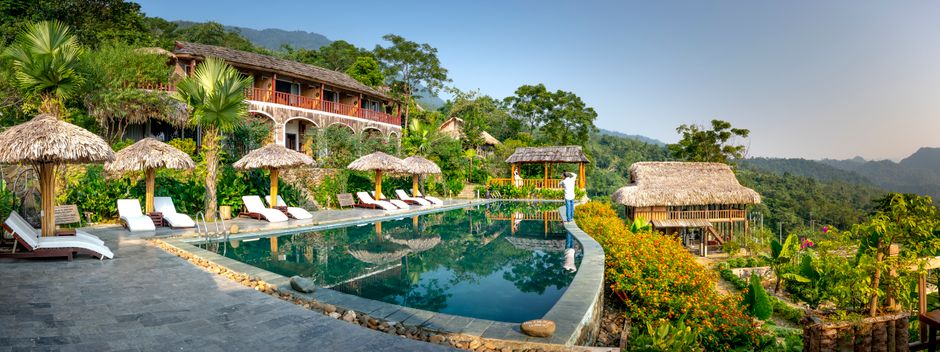
Lapa Rios sits on a private 1,000-acre reserve in the Osa Peninsula. It’s the most biodiverse place I’ve ever slept. I saw three species of monkeys, a toucan, and a sloth before breakfast. The lodge funds a local school and employs 95% of its staff from the nearby village of Puerto Jiménez.
Here’s the catch: 2026 rates start at $550 per night, and that’s for the smallest bungalow. The full-board package (which is mandatory) adds another $150 per person per day. You’re looking at $850 per night for two people before you factor in the flight from San José to Puerto Jiménez (another $200 round trip).
Is it worth it? If you’re a serious birder or wildlife photographer, yes. If you want a relaxing beach vacation, absolutely not. The beach here is small and rocky. You’re paying for the jungle immersion, not the coastline.
When NOT to Book Lapa Rios
Skip it if you have mobility issues. The bungalows are connected by steep, muddy trails. I watched a guest in her 70s struggle badly on the walk to dinner. The staff is helpful, but this is not a wheelchair-friendly property.
Nayara Tented Camp: Glamour That Hurts the Planet Less
I have mixed feelings about Nayara. It’s gorgeous — think canvas-walled suites with private plunge pools overlooking Arenal Volcano. The 2026 pricing is $650–$1,100 per night, and it sells out months in advance. But it only holds a 4-leaf CST rating. Why? Their water usage is high for the area (private pools for every suite), and some produce is still flown in from San José.
That said, they do some things right. The property is built on reclaimed cattle pasture, so no primary forest was cleared. They also run a comprehensive recycling program and banned single-use plastics in 2019. If you want the Instagram shots without the guilt, this is your pick.
My advice: book a garden-view tent ($650), not a volcano-view ($1,100). The volcano is visible from most common areas anyway, and you save $450 a night.
Common Mistakes Travelers Make Booking Eco-Lodges
I’ve made most of these myself. Learn from my errors.
- Assuming “eco” means rustic. El Silencio and Nayara prove you can have hot water, WiFi, and a king bed without trashing the environment. Don’t settle for a property that uses “eco” as an excuse for no AC or cold showers.
- Not checking the dry season. Costa Rica’s green season (May–November) means lower rates but also mud, mosquitoes, and washed-out roads. I booked Lapa Rios in October once. The trail to my bungalow was a river. Book December–April for dry access.
- Ignoring the location’s carbon footprint. Flying from San José to the Osa Peninsula emits about 0.2 tons of CO2 per person. If you’re already flying internationally, consider whether the domestic flight is worth it. El Silencio is drivable from the capital — no extra flight needed.
- Booking through OTAs that take a 20% cut. Almost every eco-lodge offers a direct booking discount of 10–15% if you call or email. I saved $180 on a three-night stay at Florblanca by booking direct.
One more thing: read the fine print on cancellation policies. Many eco-lodges have a 30-day policy because they’re small and can’t absorb last-minute no-shows. I lost a $600 deposit at Pacuare Lodge when my flight got delayed.
If you want real sustainability in Costa Rica, book a 5-leaf CST property that’s drivable from the airport, skip the add-on spa treatments, and book direct. That’s the formula I use, and it hasn’t failed me yet.